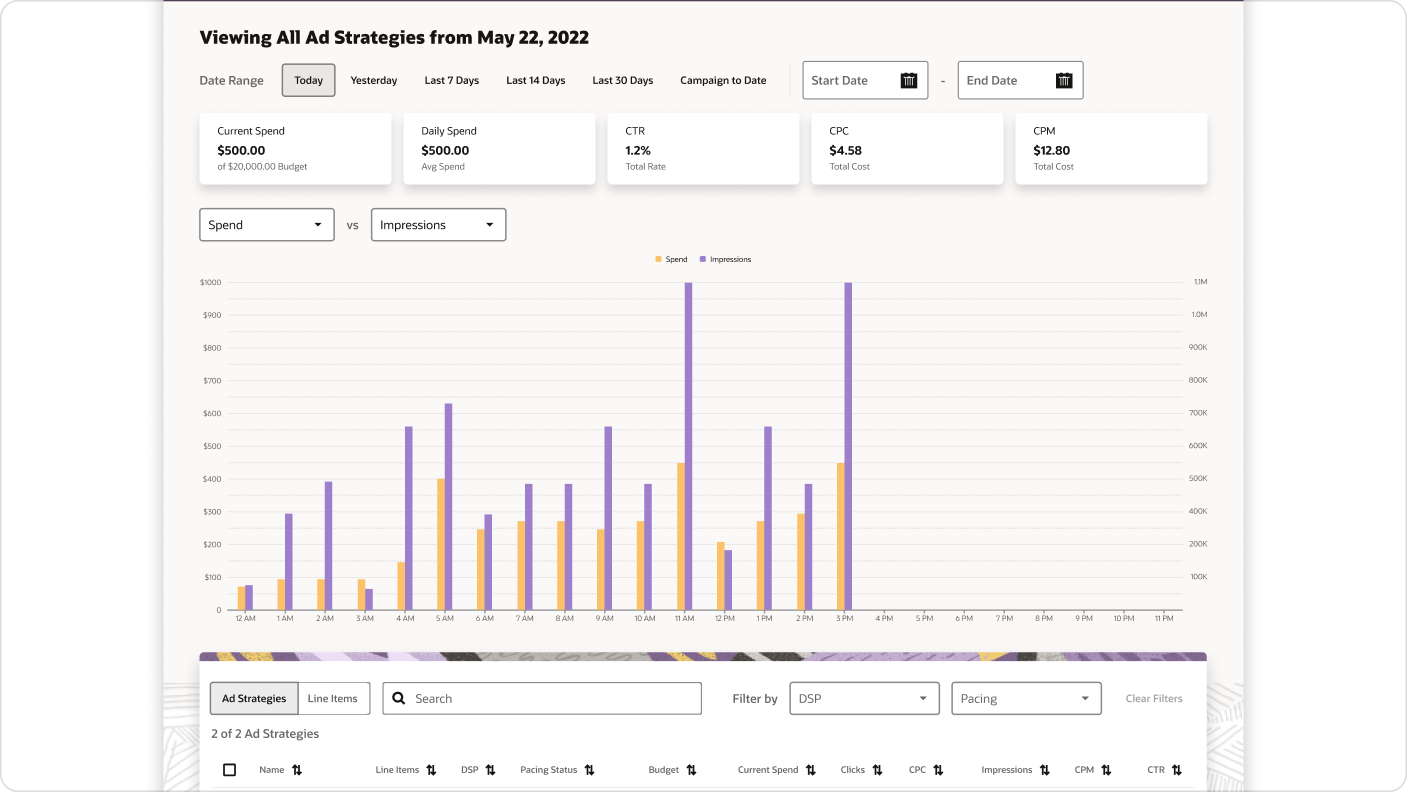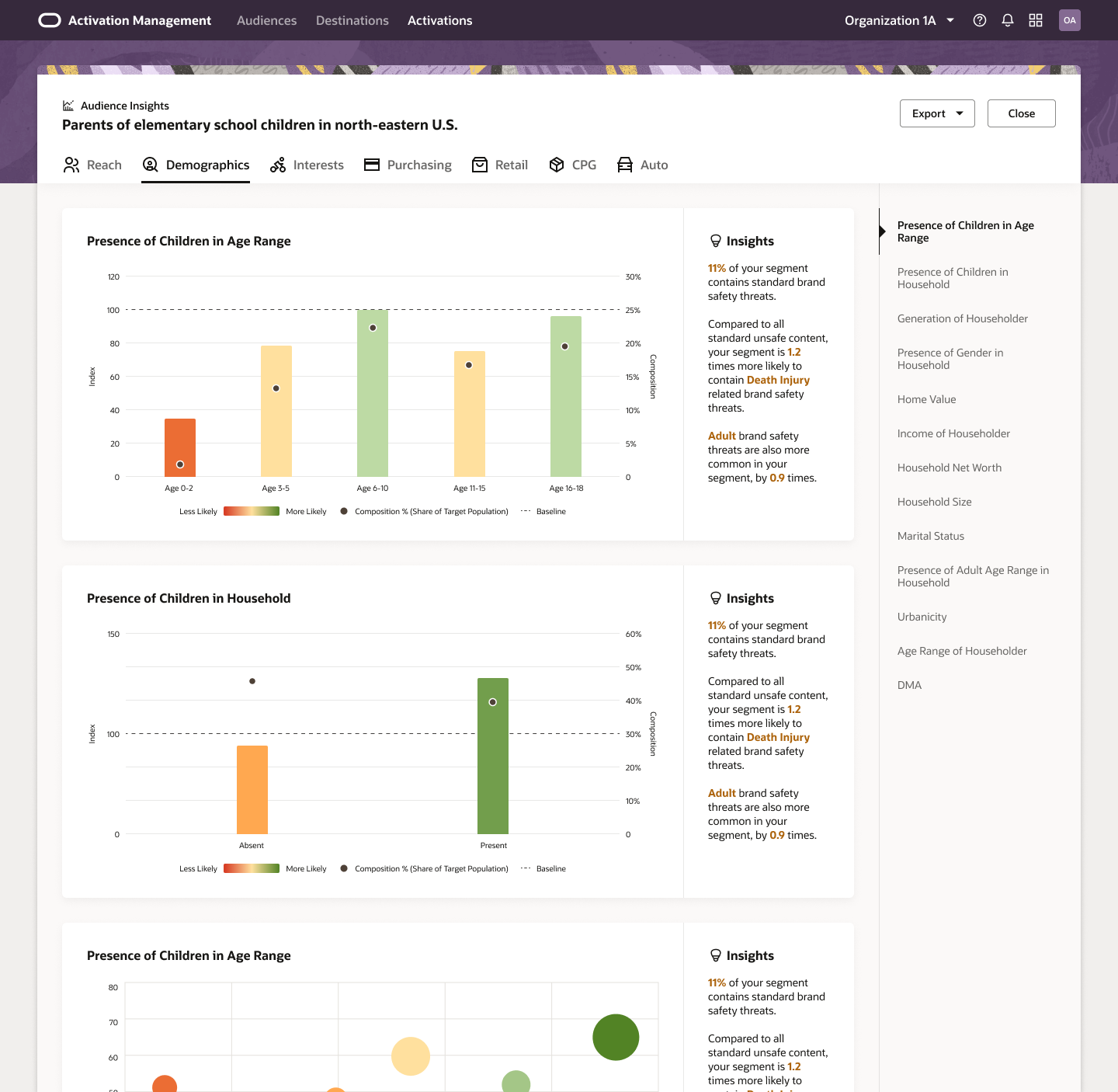
Unified 6 Startups to drive $300M+ growth
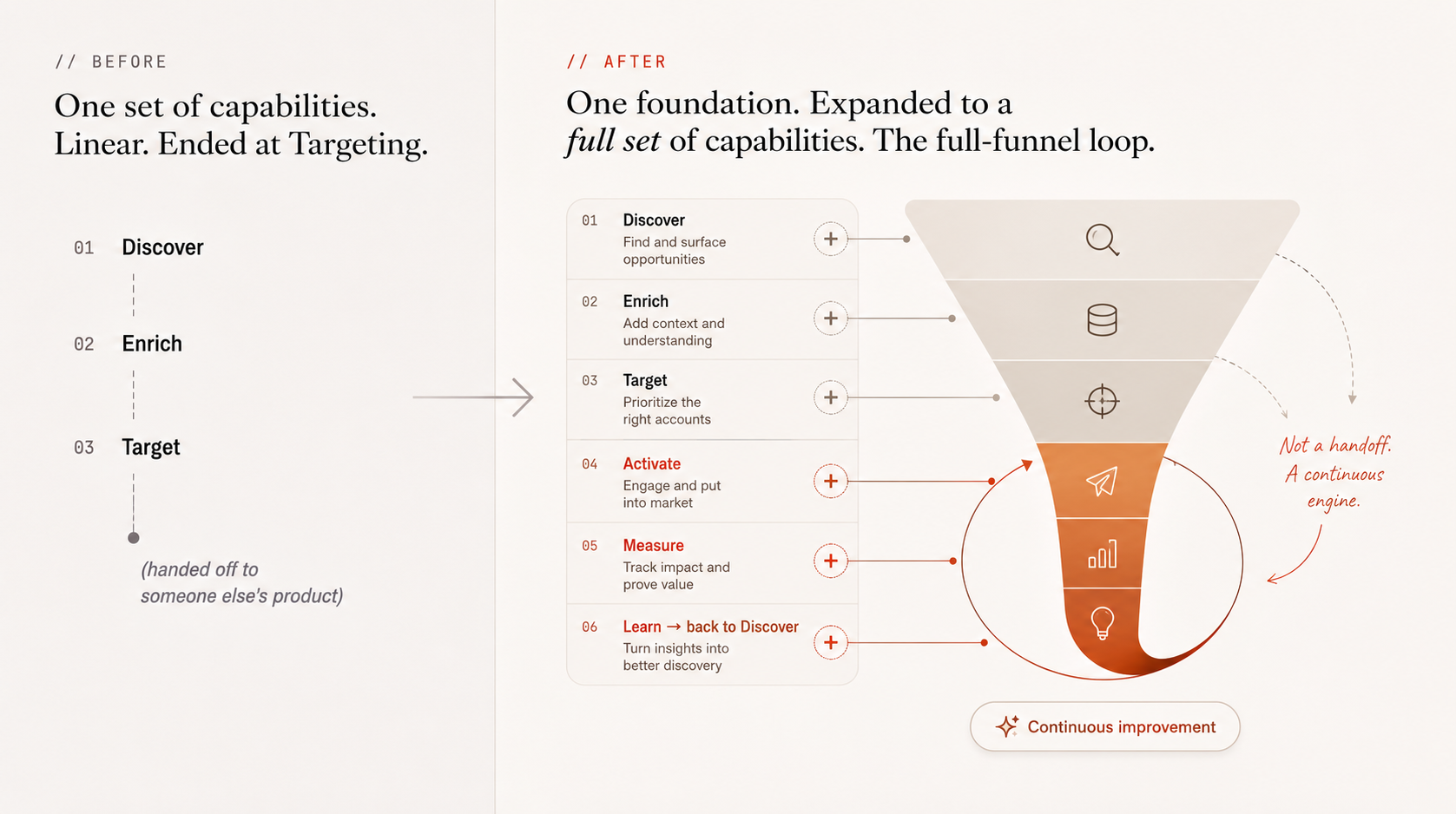
The research showed the model was incomplete. The vision closed the loop.
Oracle had bought a category. What it didn't have was a product. Oracle Data Cloud was selling discovery: find audiences, enrich them, target them. Customer interviews surfaced that the most valuable part of the cycle was missing. I authored the vision that closed the loop and repositioned the business from a data services company into a full-funnel advertising platform.
From data company to full-funnel platform
Oracle had spent years acquiring ad-tech: BlueKai, AddThis, Datalogix, Crosswise, Grapeshot, Moat. The market saw six tools. Customers wanted a platform. My design org's research surfaced something more important. Customers weren't asking for the existing model to be cleaner. They were asking for it to be bigger, to extend past discovery and targeting into activation, measurement, and learning. That insight became the vision.
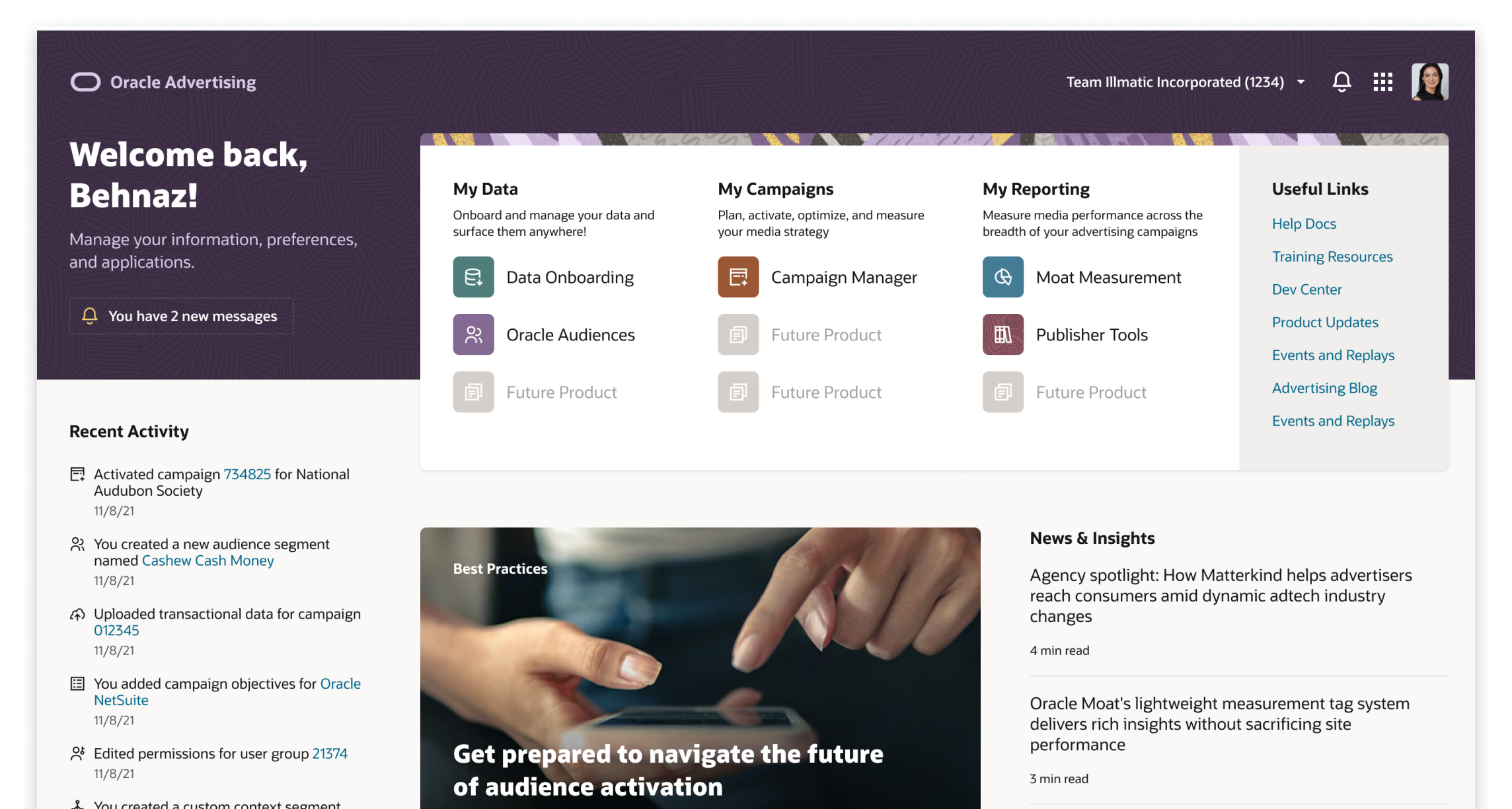
The vision became Oracle Advertising.

How I led
I owned the strategic vision end-to-end. Framework and execution were a partnership with product and engineering leadership.
- Authored the vision: repositioning Oracle Data Cloud as a full-funnel platform, not a data warehouse
- Built the executive deck and secured leadership buy-in to underwrite a multi-year platform investment
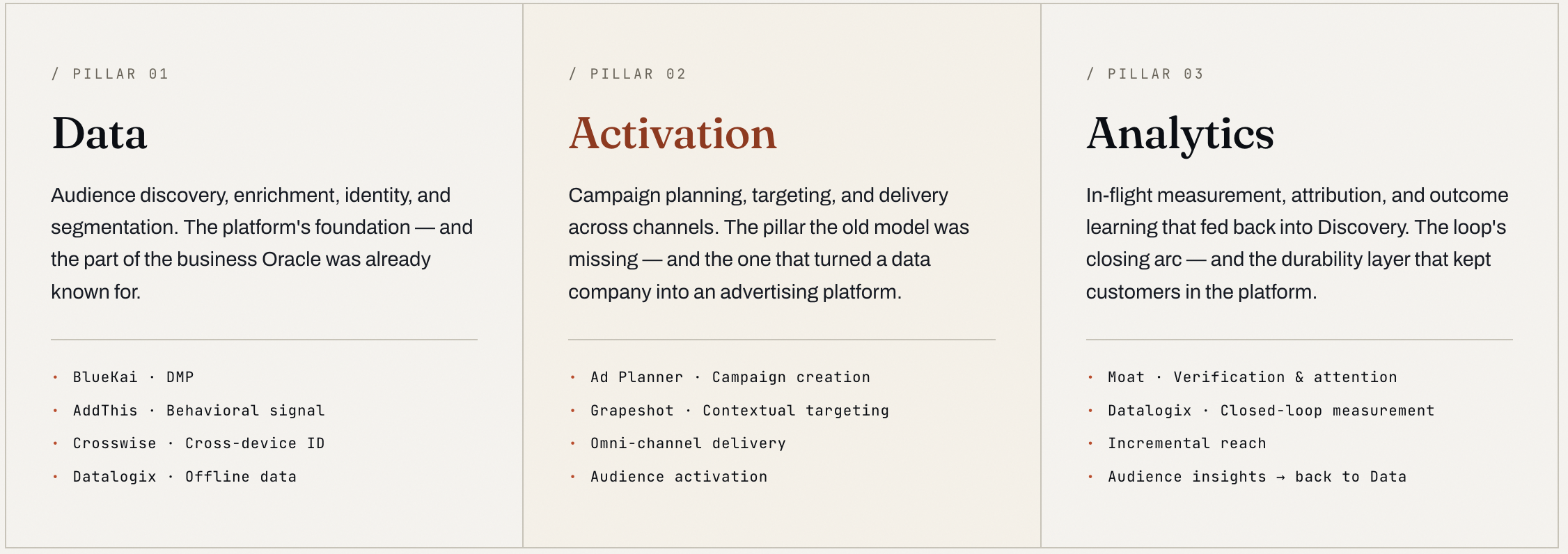
- Partnered with PM and Eng leaders on the unifying IA: Data, Activation, Analytics
- Led the design org of 13 (two managers, ten designers, one researcher) across the multi-year buildout
A platform-scale repositioning, measured.
$300M+
Revenue impact
+50%
Platform engagement
+28pts
Customer Effort Score (Top Box)
−35%
Support load
The research said the model was the problem
Oracle Data Cloud was modeling advertising as a funnel that ended at targeting. Audiences in. Impressions out. What happened next was someone else's product.
My design team ran customer interviews across the ad-tech ecosystem: junior planners, customer-data leads, strategic CMOs at agencies, brand-side stakeholders. The pattern was unmistakable. Customers didn't want a better discovery tool. They wanted to know what happened after they targeted. Did the campaign deliver? Did the audience convert? What did that tell them about the audience for next time?
The model didn't end at discovery. It looped back through it.
Customers were doing this work anyway, manually, across siloed systems, often with an agency stitching it together. The market wasn't asking for a better DMP. It was asking for the loop to close.
Headwinds impacting the advertising ecosystem
- Cookie deprecation. Third-party tracking was going away. Advertisers needed alternatives, fast.
- Fragmented data. Customer data lived across too many systems, making it hard to act on.
- Risky sharing. Sharing data with partners was painful, legally ambiguous, and costly.
- No governance. Once data was shared, organizations had no visibility into how it was used.
- Tool fatigue. Multiple, disconnected systems were needed to get work done.
- Signal loss. Reduced targeting precision was driving up compliance costs.
What customers told us
-
“We build the audience, push it to the DSP, then have no idea if it worked until the agency sends a report two weeks later.”
-
“I don't need another tool. I need the tools I already have to give me an accurate understanding of my ad spend, cross-platform.”
-
“The data we're collecting after the campaign is the most valuable signal we have. And it lives nowhere near where we built the audience.”
The Full-Funnel Loop
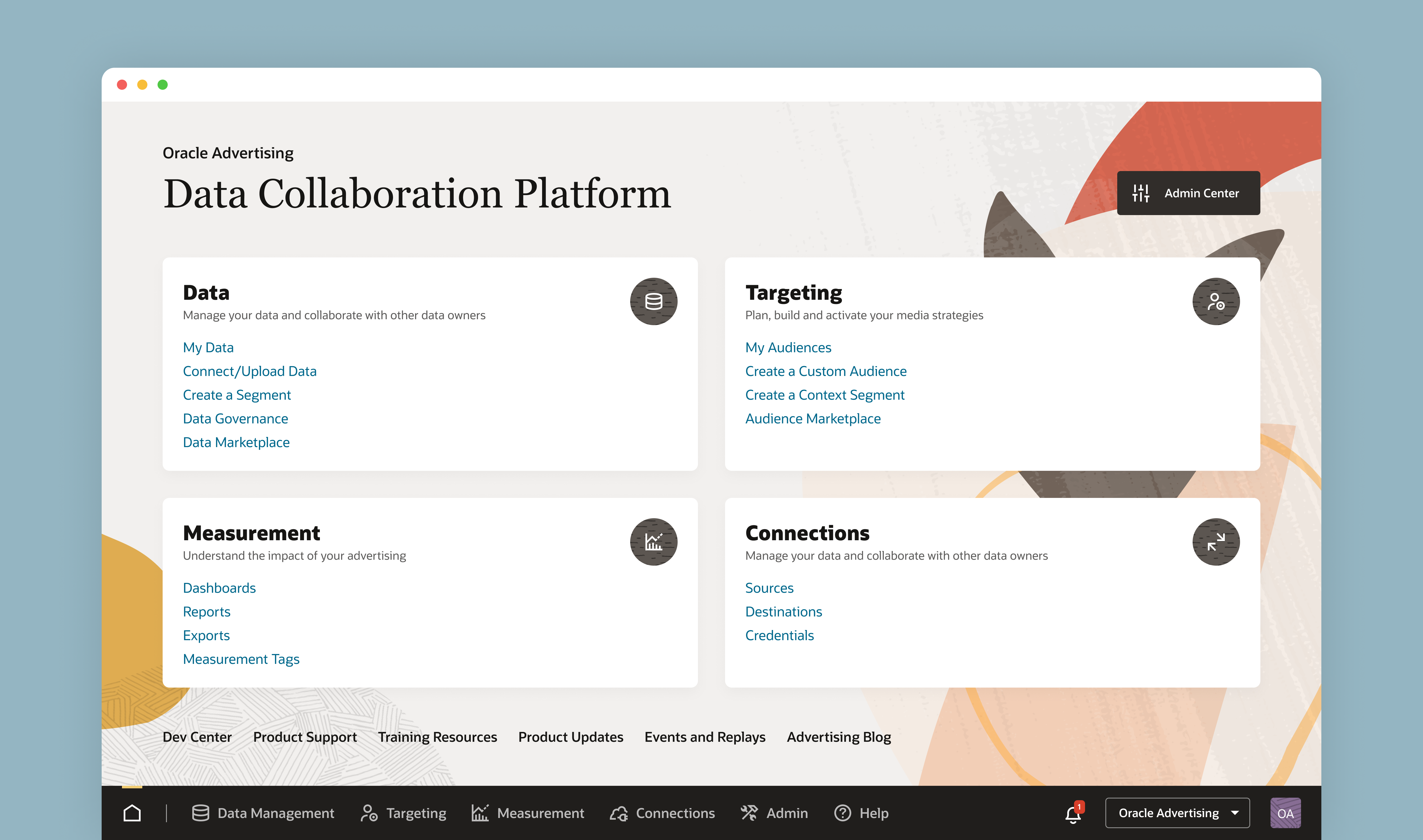
I translated the customer insight into a strategic vision. Oracle was not a data company that also did targeting. Oracle was an advertising platform that started at audience discovery, ran through activation, and looped measurement back into learning. The framework gave the company a categorically larger market to compete in, and gave customers a single product that did what they were already doing across five.
Understanding the user
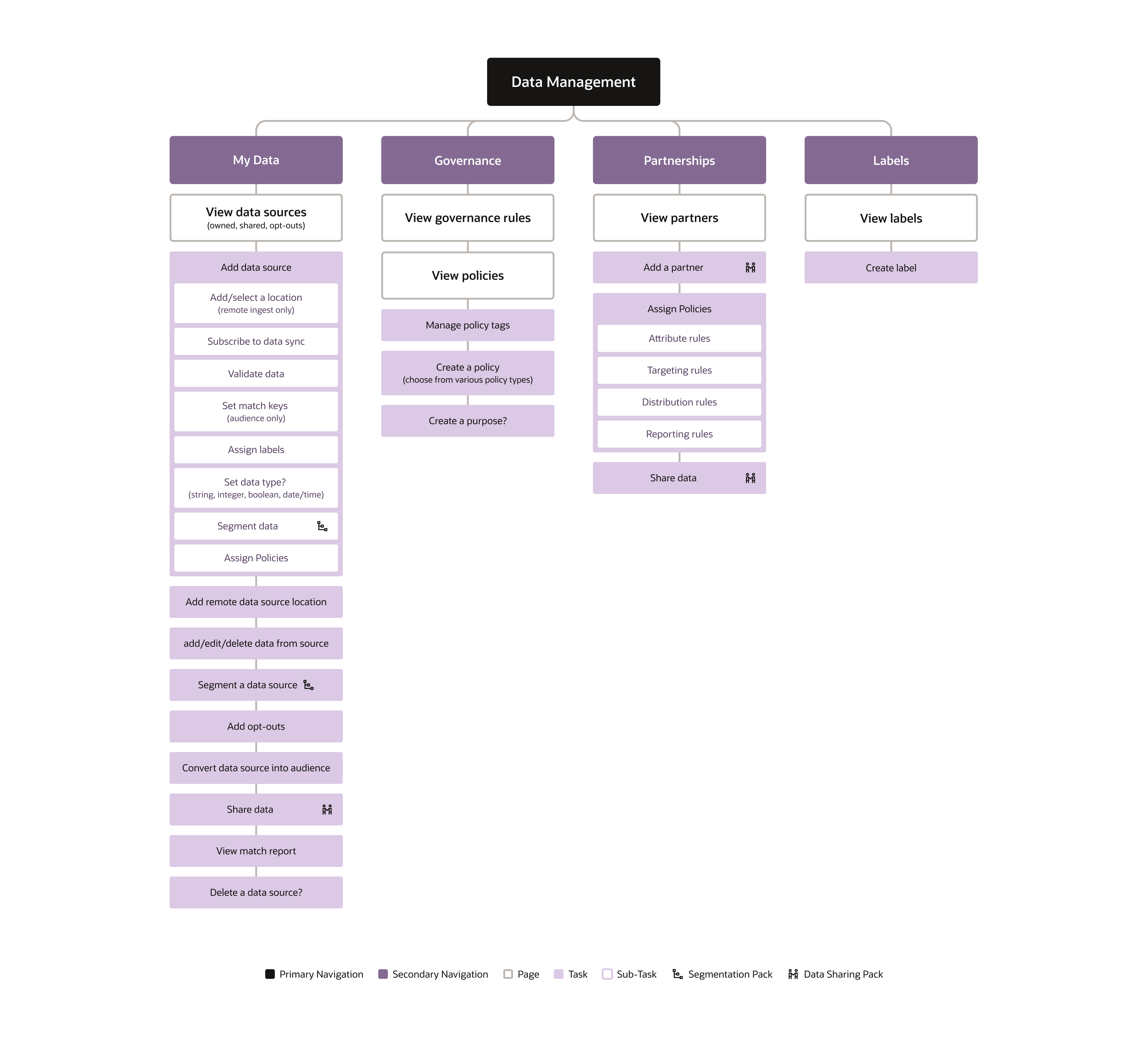
Working from documented use cases, user goals, and subject-matter expertise, we mapped the relationships between those objects and their associated actions to understand how they interacted and depended on one another.
We ran an open card-sorting exercise with key stakeholders, which surfaced common organizational patterns and mental models, ensuring the system could support both existing capabilities and future needs.
The IA that made the loop navigable
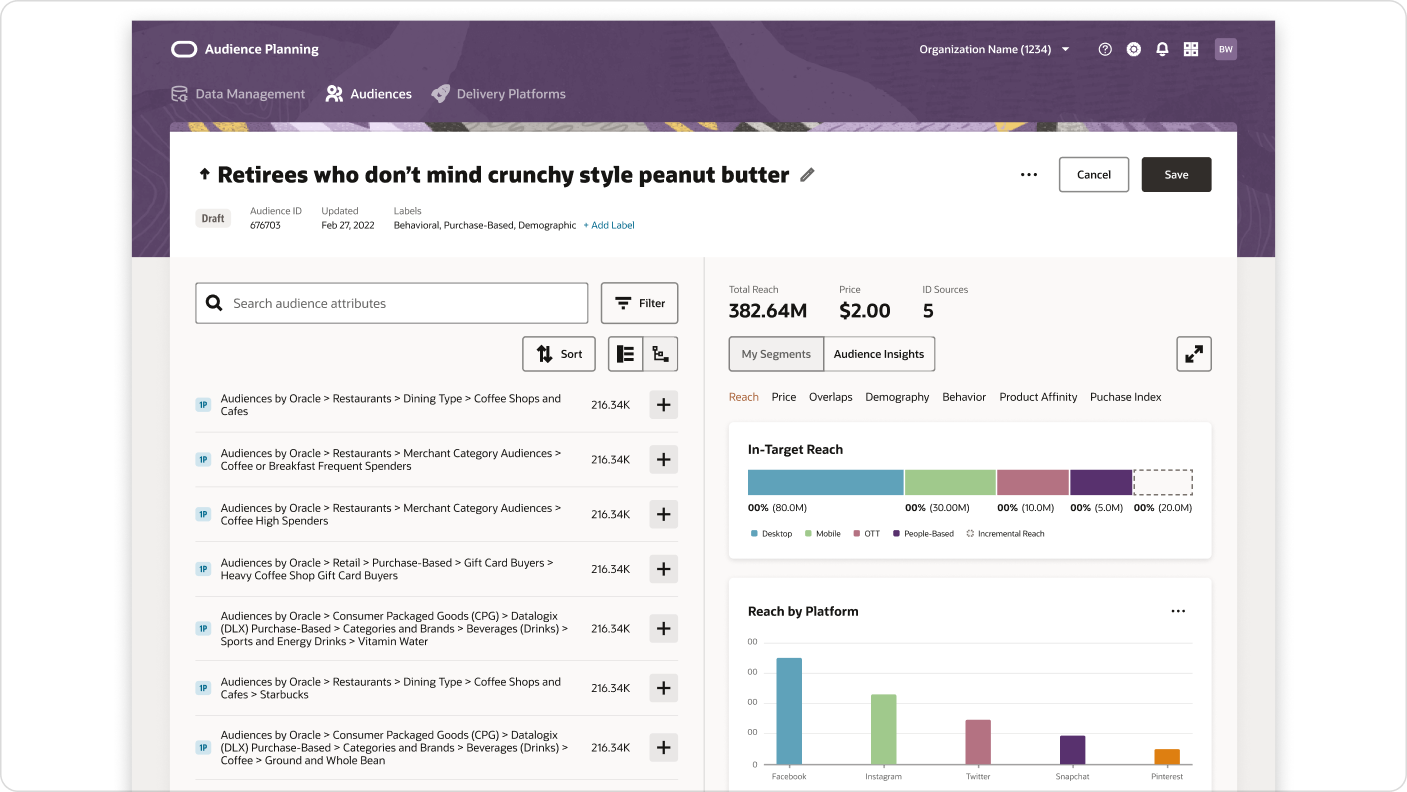
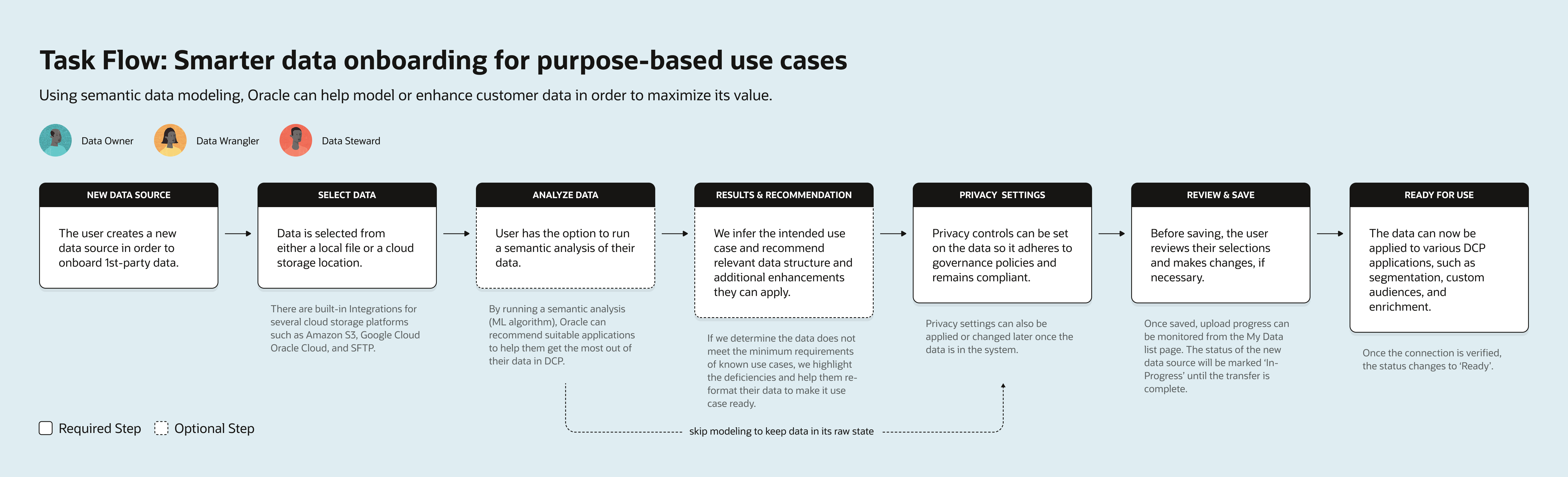
Once leadership backed the vision, the team partnered with product and engineering to ship the unifying information architecture. Six products. One sign-on. Three top-level pillars. Every capability a customer needed lived in one of them.