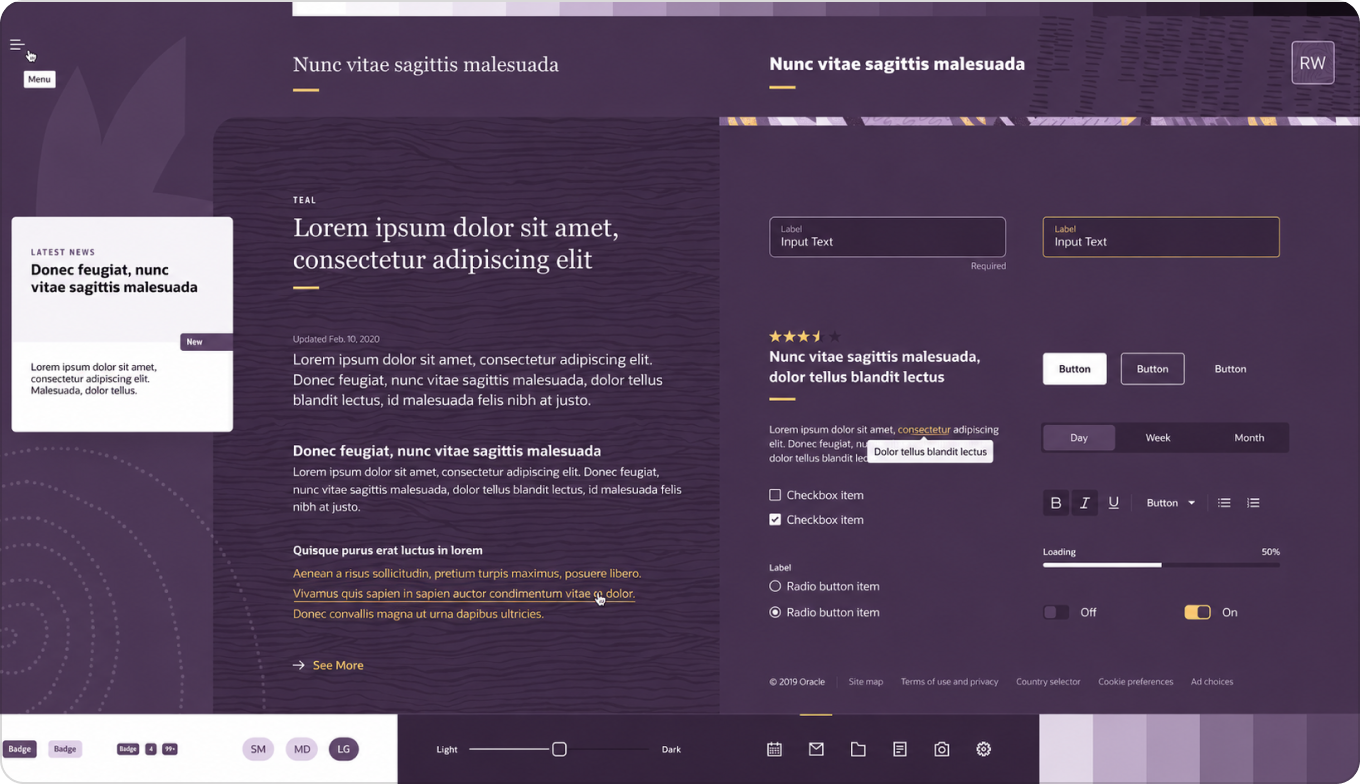
Oracle Redwood Design System
Goodbye Bauhaus, Hello Nature
After our startup acquisition, we had a new initiative from leadership to modernize and rebrand Oracle. I was part of the core leadership team to help shape what the new brand expression would be across brand, digital, and physical expressions.
If you can remember this era, it was the time when many traditional brands were getting a refresh/relaunch. They shook up the narrative on what was to come. At Oracle, the problem wasn’t just that the design systems were consistency but that the software had also aged. However, the real challenge was organizational scale. How do we reimagine a brand, establish new guidelines and practices all while getting adoption at scale across the 150,000 person company.
The company was also doing this refresh all while also absorbing multiple acquired startups with their own technology stacks and front-end frameworks. That meant the design system had to do several things at once:
- Support brand modernization
- Create consistency across multiple product verticals
- Reduce duplicated design and engineering effort
- Preserve enough flexibility for dense, domain-specific enterprise workflows
My role was to help translate a central Oracle initiative into something operational for our specific vertical (later I helped rebrand as Oracle Advertising), without losing alignment with the broader Redwood direction.
It was the start of something really, really good.
The ambition behind Redwood was to reposition Oracle as more state-of-the-art and premium product suite, while still preserving usability. But we had greed light to be as disruptive as we wanted to be.
That meant the team explored visual inspiration beyond standard enterprise software references. We looked at motion, music, film, patterns in nature, and organic forms to shape a more expressive and human interface language.
One of the underlying design beliefs was that B2B software does not have to feel cold or purely functional. The work aimed to introduce more empathy, warmth, and physicality into enterprise product experiences.
Leading through transformational change
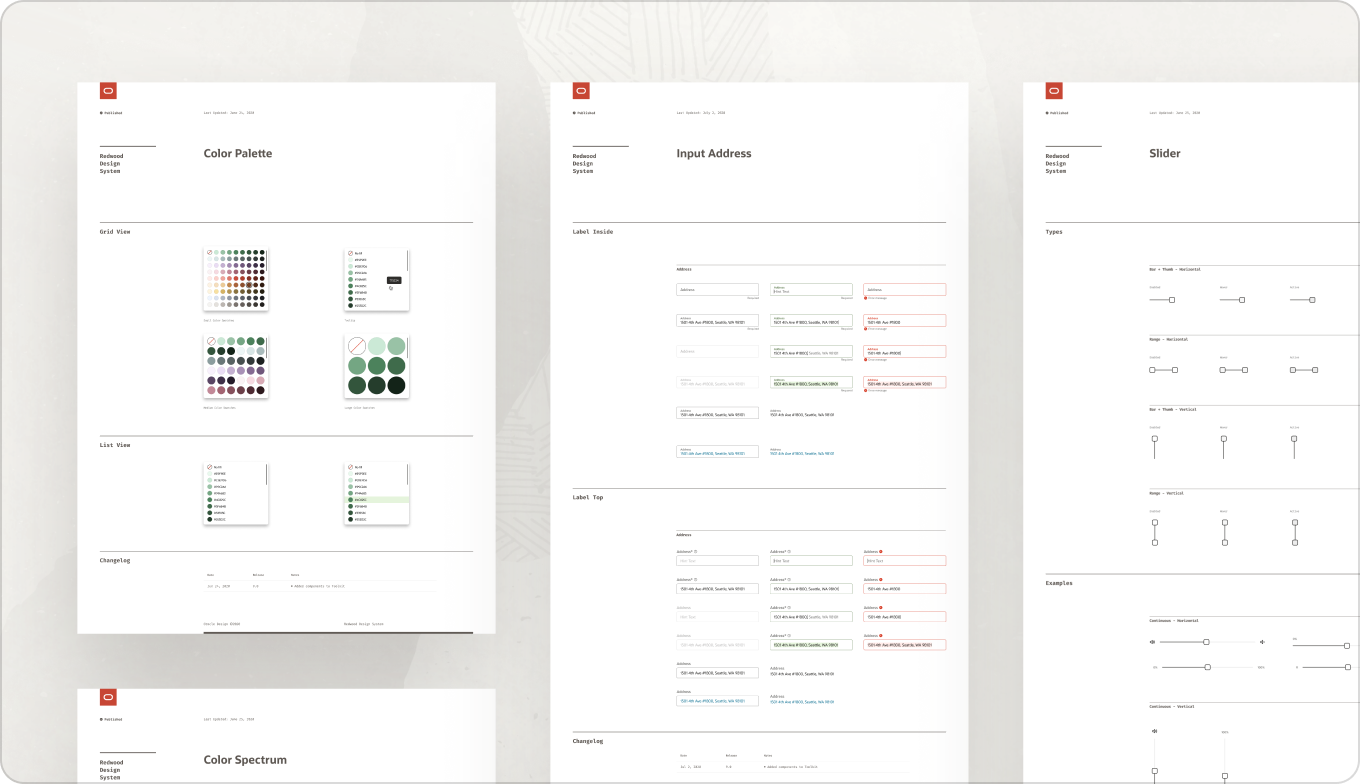
With input and guidance, I helped shape the artifacts available to over 200 designers across the company. The guidelines that we needed, what elements must be included, how resources were shared across the global brand. I helped advocate for the adoption of Figma as a central design tool. Until this point, each design team had their own process, their own tools of preference, and the products suffered. I also helped shape the core Oracle design system and helped develop vertical oriented color treatments for sub-brand distinction while adhering to the broader global brand.
So my work was not only about creating components. It also included:
- Translating brand guidance into usable team-level systems
- Aligning design decisions with engineering realities
- Building governance loops between central and vertical teams
- Helping the organization adopt a scalable operating model for consistency
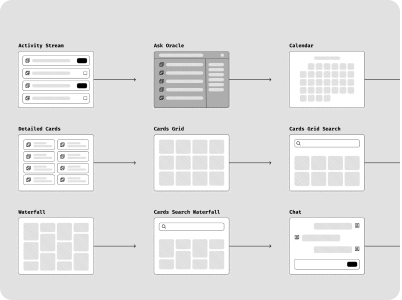
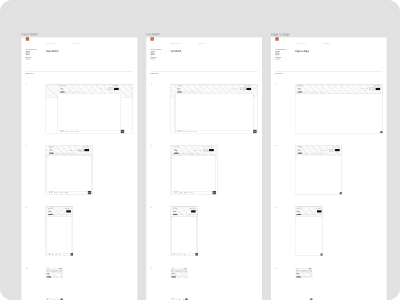
Show the Path, Not Just the Vision
In practice, our ethos at the leadership level was to help inspire so that these new brand elements didn’t just sit there in the tool set but inspired the team to adopt and push further. A design system is only the beginning.
Governance at Scale
At a high level, our process for the design system looked like:
- Adopt the Redwood visual language, including colors, typography, iconography, illustrations, and overall brand essence
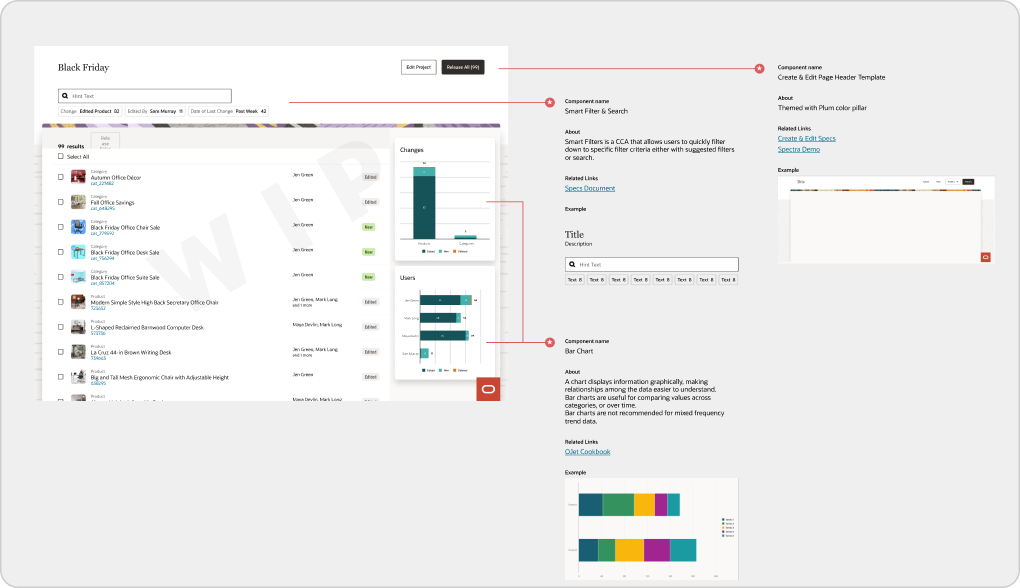
- Create product-specific components, templates, and patterns ourselves
- Pressure test patterns against actual product use cases
- Bring those patterns back into evaluation with the central Redwood team for consistency and adherence review
This created a decentralized ownership model with centralized governance.
That model gave vertical teams enough autonomy to solve domain-specific problems, while still maintaining consistency and quality across the larger Oracle ecosystem.
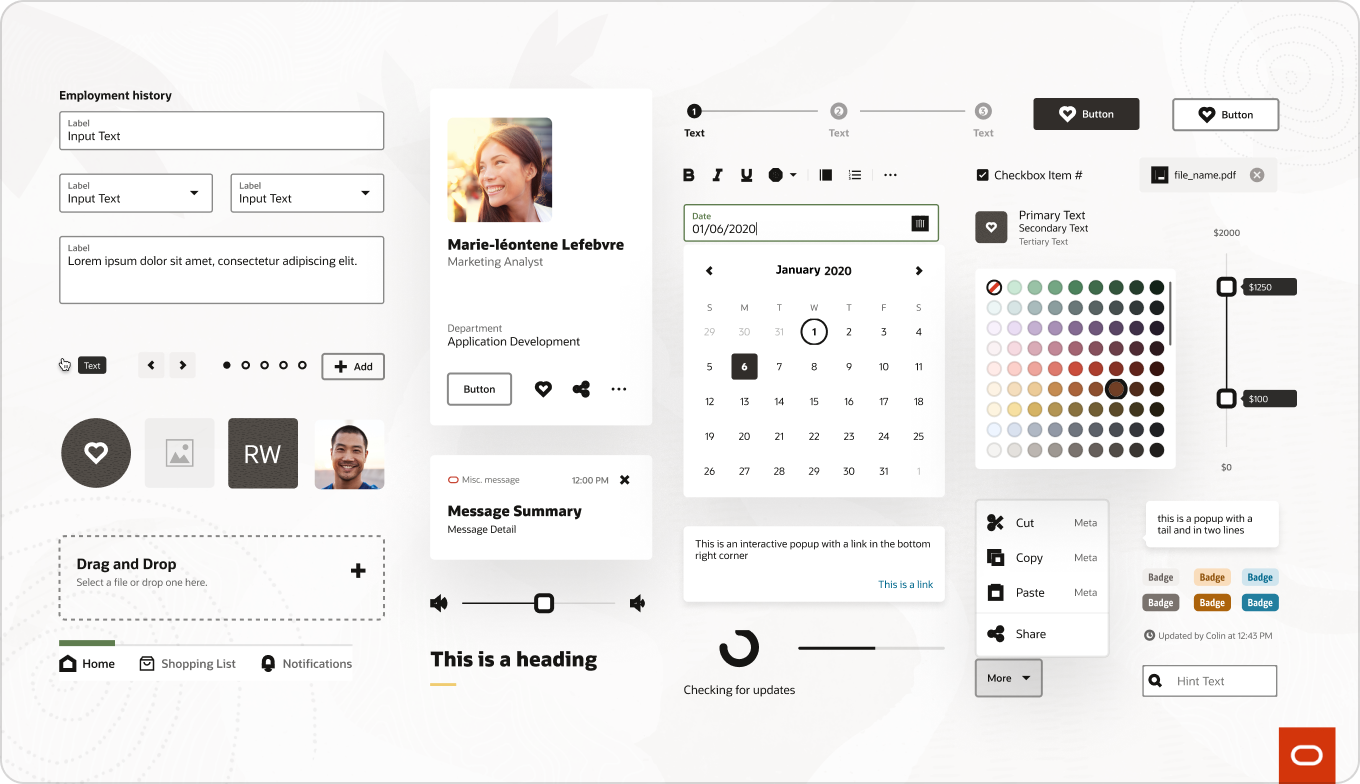
Innovation thrives when flexibility is nurtured.
The Oracle Redwood experience demonstrates how I approach design systems as operational infrastructure.
It shows that successful system work is not just about creating a component library. It is also about aligning brand, product, design, and engineering. Making pragmatic technical decisions under real constraints. Designing governance models that balance autonomy with consistency. Sequencing adoption in a way that supports delivery rather than blocking it.